A sink that drains slower every day or a shower that leaves you standing in an inch of water is one of the most common calls we get, and honestly, plenty of these clogs you can handle yourself. A little know-how saves you a service call for the simple ones.
But not every clog is a DIY job, and the difference matters. Push too hard on the wrong kind of clog and you can turn a small problem into a real one. Here's how to clear the easy ones safely, and how to recognize the clogs that are trying to tell you something bigger.
Start With the Simple, Safe Fixes
Before you reach for anything drastic, work through the basics. Most everyday clogs give way to one of these, and none of them will hurt your pipes.
The plunger, done right
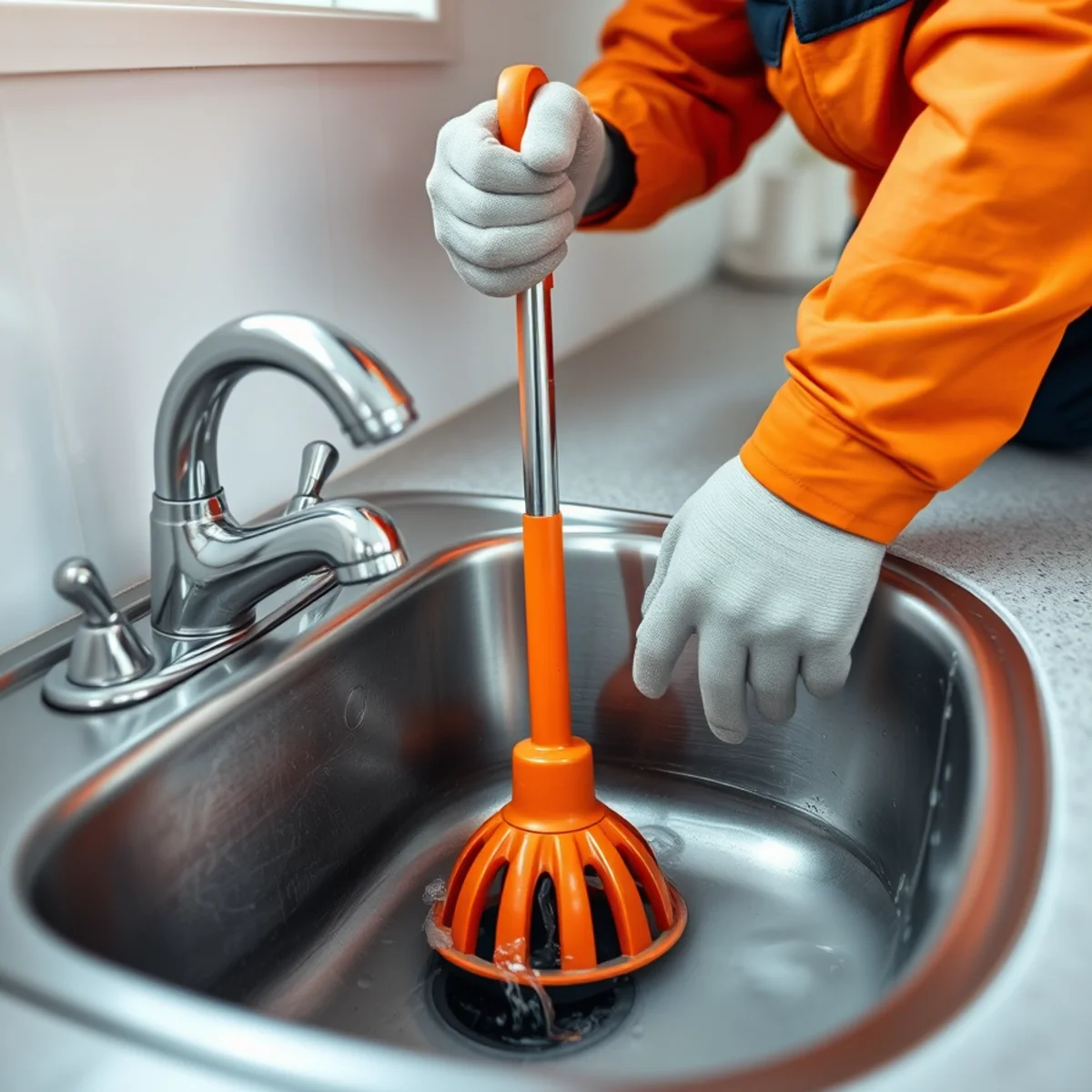
A plunger is still the best first tool for most clogs. For a sink, block the overflow opening or the second basin with a wet rag so your force goes down the drain instead of escaping. Get a good seal and use firm, steady plunges. Patience and a real seal do more than brute strength.
Hot water and dish soap
For a grease-related kitchen clog, a kettle of hot, not boiling, water with a squirt of dish soap can loosen the buildup enough to break it free. Boiling water can harm certain pipes and fixtures, so keep it hot rather than at a rolling boil.
Baking soda and vinegar
For a mild clog or a smelly drain, pour in baking soda, follow it with vinegar, let it fizz for a while, then flush with hot water. It won't clear a hard blockage, but it's a gentle way to freshen a slow drain without harsh chemicals.
Clean the P-trap
The P-trap is the U-shaped pipe under your sink, and it catches a surprising amount of gunk, hair, and lost jewelry. Put a bucket underneath, unscrew the two fittings, clear it out, and reassemble. It's a genuinely doable job and often the fix when a plunger alone won't do it.
Why We Steer You Away From Chemical Drain Cleaners
It's tempting to pour a bottle of drain cleaner down the pipe and walk away, but we ask homeowners not to. Those products rely on harsh, heat-generating reactions that are rough on pipes, especially older ones common in Indianapolis homes, and on the seals and joints holding them together.
They're also risky for you. If the chemical doesn't clear the clog, you're left with a pipe full of caustic liquid that anyone working on the drain afterward has to deal with. And they often don't fully clear the blockage anyway, so you're back to the same problem with damaged pipes on top of it. A plunger, a P-trap cleaning, or a call to a pro is almost always the better path.
Clear Signs It's Time to Call a Pro
Some clogs are a message, not a nuisance. When you see these, stop the DIY and bring in help, because pushing harder usually makes them worse.
- Several fixtures back up at once, which points to the main line rather than one drain
- A toilet burbles when you run the sink, or a tub backs up when the toilet flushes
- The same drain clogs again and again, no matter how often you clear it
- A sewage smell comes up from the drains
- Water or waste backs up into a lower drain, like a basement floor drain
What Those Signs Usually Mean
When more than one fixture is affected, the clog usually isn't in the fixture, it's deeper in the system where a plunger can't reach. Water backing up into a low drain when you use water elsewhere is a classic sign of a main-line clog, and that calls for professional drain cleaning with the right equipment to reach and clear the blockage.
A drain that clogs repeatedly is another red flag. A recurring clog often means something structural, like buildup deep in the line, a bad slope, or tree roots that have worked into the pipe. In those cases the real issue may be a sewer line problem that a camera inspection can pinpoint, so you fix the cause instead of clearing the same clog over and over.
A Word on Garbage Disposals
Kitchen clogs sometimes trace back to the disposal rather than the drain. If your disposal hums but won't spin, or backs up into the sink, don't keep flipping the switch, that can burn out the motor. Many units have a reset button on the bottom and a slot for an offset wrench to free a jam by hand.
If the disposal is leaking, won't reset, or keeps jamming, it may be worn out. That's when a garbage disposal repair or replacement is the honest fix rather than fighting it every time you run the sink.
Know When to Stop and Ask for Help
There's no shame in trying the simple fixes first, and there's no shame in calling when they don't work. The skill is knowing the line between the two, so you don't turn a ten-minute job into a flooded floor.
We help homeowners across Indianapolis and communities like Fountain Square with the clogs that won't quit. If you've plunged, cleared the trap, and it's still backing up, or if more than one drain is involved, reach out and we'll clear it the right way.