The water's gone lukewarm, there's a puddle near the tank, or your heater is making a sound it never used to make. Now you're stuck with the question every homeowner dreads: is this a fixable problem, or is it time for a new unit?
The good news is that the answer usually comes down to a few clear factors. After more than a decade of working on tank heaters across Indianapolis, we lean on age, the cost of the fix, and the type of failure to make the call. Here's the same framework, so you can walk into the decision with your eyes open.
Start With Age: The 8-to-12-Year Rule
A standard tank water heater lasts roughly 8 to 12 years. That range isn't a hard expiration date, but it's the single most useful number in this decision. If your heater is comfortably inside that window and healthy otherwise, a repair often makes good sense.
Once a unit is past ten years, the math shifts. You could pay for a repair today and still be facing a full replacement within a year or two, because the rest of the tank is aging right alongside the part that failed. If you don't know your heater's age, check the serial number sticker on the tank. The date is usually encoded in the first few characters.
The 50% Rule of Thumb
Here's a simple test that keeps people from throwing good money after bad. If a repair would cost roughly half or more of what a new unit costs, replacement is usually the smarter buy, especially on an older tank.
A minor part on a fairly new heater is an easy yes to fixing. A major repair on a heater that's already near the end of its life is where people get stuck spending on a unit that owes them nothing. When we quote a water heater repair, we'll always tell you honestly where the job falls on that line so you can decide with real numbers.
Warning Signs Worth Watching
Some symptoms point toward a simple fix. Others are the tank itself telling you it's on the way out.
Rust-colored water
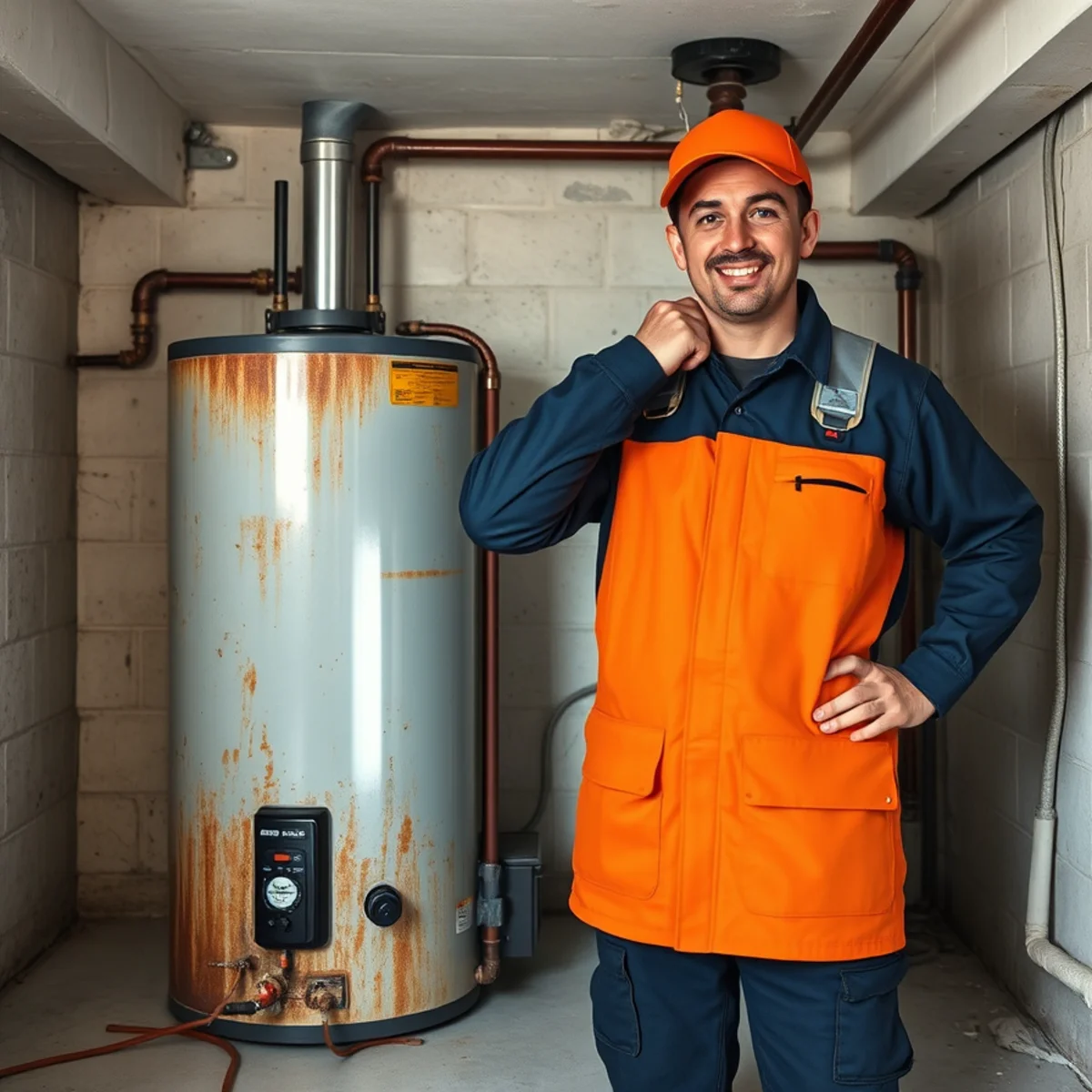
If hot water runs rusty or has a metallic smell, the inside of the tank may be corroding. Corrosion is one of the few problems you can't reverse. Once the steel starts to go, replacement is coming.
Water pooling around the base
A leak from a fitting or valve is often repairable. A leak from the tank body itself is not. Steel tanks fail from the inside out, and a weeping seam means water is finding its way through the wall. That heater needs to be replaced before it lets go all at once.
Popping, rumbling, or banging
That noise is usually sediment. In our hard-water region, minerals settle to the bottom of the tank and bake into a crust. The rumble is water bubbling up through that layer. Flushing helps early on, but heavy long-term buildup makes the heater work harder and shortens its life.
Rising energy bills
A heater fighting through sediment or nearing the end of its life burns more fuel to do the same job. If your bills have crept up while everything else stayed the same, an aging water heater is a fair suspect.
The Anode Rod: The Part That Saves the Tank
Inside every tank heater is a sacrificial anode rod, a metal rod designed to corrode so the tank doesn't. It quietly takes the damage that would otherwise attack the steel. Most homeowners have never heard of it, and that's a shame, because a fresh anode rod can add years to a heater's life.
If your unit is only a few years old and starting to show rust, a plumber can check whether the anode rod is spent. Replacing that rod is a small job compared with replacing the whole heater, and it's exactly the kind of maintenance that separates a heater that lasts eight years from one that lasts twelve.
When Replacing Pays You Back
Sometimes replacement isn't just the safer choice, it's the better investment. A newer heater runs more efficiently than a tired one caked with sediment, so the unit can pay part of its own way on your energy bills.
Replacement is also the moment to ask whether a tank is still the right fit for your home. Many homeowners use a failing heater as the chance to move to a tankless water heater for endless hot water and a longer lifespan. Whichever direction you go, a proper water heater installation sized to your household is what makes it last.
- Under 8 years and a minor part: usually repair
- Over 10 years with a major failure: usually replace
- Repair cost near half of a new unit: lean toward replace
- Leaking from the tank body itself: replace
- Rusty hot water: the tank is corroding, plan to replace
Get a Straight Answer Before You Decide
The worst outcome is paying for a repair one month and a replacement the next. A good plumber will look at the age, the failure, and the numbers together and tell you honestly which way to go, even when the honest answer is the cheaper one.
We serve homeowners across Indianapolis and nearby communities like Fishers, and we'll always give you the real picture on your water heater. If yours is acting up, reach out and we'll help you make the call that's right for your home and your budget.
Frequently Asked Questions
Keep exploring
Service Areas